The Twin Cities just felt their first real chill of the season, and it’s a clear warning for anyone planning to build this fall. A construction staking survey done before the soil freezes can save you from major headaches once winter takes over.
Last week, on October 7, 2025, the National Weather Service – Twin Cities issued the first frost advisory of the season. Local reports from MPR News and FOX 9 Minneapolis–St. Paul confirmed below-freezing temps across the metro and northern suburbs. For builders and surveyors, that’s not just a weather update—it’s a construction deadline.
Frost Isn’t Just a Weather Update — It’s a Construction Deadline
In Minnesota, frost doesn’t just coat the grass; it changes how the ground behaves. As moisture in the soil freezes, it expands, lifting the surface and anything sitting on it. This process—known as frost heave—can shift stakes, twist elevations, and throw off your entire site layout.
A foundation poured on frozen soil can settle unevenly once the thaw arrives, leading to cracks or drainage problems later. That’s why state code requires frost-protected footings extending at least 42 inches below grade across southern Minnesota. The rule is simple: stay below the freeze line, or your elevations won’t hold.
The first frost advisory is nature’s countdown clock. Once frost starts forming overnight, every day you wait raises the risk of losing survey accuracy.
Why a Construction Staking Survey Matters Right Now
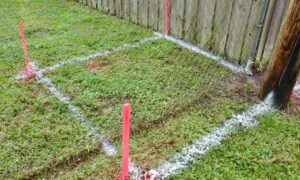
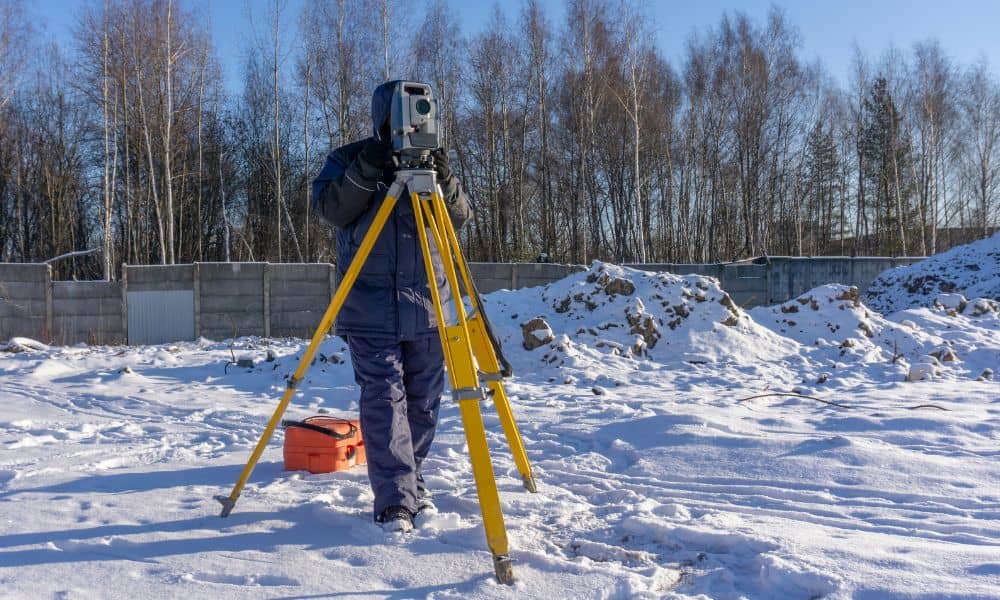
A construction staking survey turns your approved plans into precise ground markings. Surveyors mark the exact points for building corners, footings, driveways, and utility lines, ensuring that every element of your site sits exactly where it should.
Without accurate staking, contractors might rely on assumptions—and assumptions don’t survive a Minnesota winter. When soil freezes and shifts, even a small misalignment can mean re-excavating or re-pouring in spring. Doing the survey before the freeze locks your layout in place.
By mid-October, daytime temps might still feel mild, but underground, the frost line is advancing fast. If you’re planning to pour concrete or start a foundation, this is your last good window for reliable elevations.
What Frost Does to Site Control

Frost doesn’t move evenly—it depends on soil type, moisture, and sun exposure. Minneapolis’ clay-rich soils hold water, so they freeze deeper and faster than sandy or loamy soils. When that moisture expands, it pushes stakes upward and throws off control points.
Once snow covers the ground, you can’t verify markers or recheck grades. Any lost or tilted stake means lost accuracy. Come spring, you’ll need another survey just to re-establish control.
In short: frost doesn’t just stop construction—it erases precision.
The Builder’s Pre-Freeze Strategy
Veteran Minnesota contractors plan their schedules around one thing: beating the frost. Most aim to finish staking and as-builts by mid-October, long before frozen mornings become daily.
A smart pre-freeze plan includes:
- Scheduling your construction staking survey early.
- Capturing spot elevations for future grading or drainage checks.
- Setting temporary benchmarks to restart work seamlessly in spring.
- Requesting a mini as-built for any foundations or retaining walls poured this month.
Surveyors call it a Pre-Freeze Package—a short, efficient set of services that lock in data before the ground hardens. Those few hours now can prevent weeks of rework later.
Why Minneapolis Conditions Demand Early Action
In the Twin Cities, frost runs deep. Areas like Maple Grove, Minnetonka, and Bloomington often see frost depths over 40 inches by January. Once that happens, staking is nearly impossible until April.
The region’s combination of heavy clay and high moisture means elevations shift dramatically during freeze-thaw cycles. Even small backyard projects—like garage pads, walkways, or fences—can end up uneven if elevations weren’t captured before the freeze.
That’s why builders across Hennepin and Ramsey counties treat the first frost as the official end of their staking season. Delay just a week or two now, and you may lose an entire construction phase.
Homeowners Should Pay Attention Too
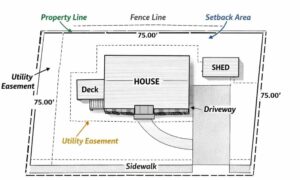
This deadline isn’t just for big developers. If you’re adding a deck, garage, or home extension, you still need proper layout data. A licensed surveyor ensures your project follows setbacks, drainage slopes, and property lines—essential details that prevent disputes and rework.
Skipping the survey or rushing through it in frozen soil could leave you with uneven grades or structures that don’t meet city requirements. A construction staking survey confirms that your project sits exactly where it should—both legally and structurally.
The Clock Is Ticking
Between now and mid-October, the soil temperature will continue to drop. Once it dips below 32°F consistently, staking accuracy plummets. The good news: there’s still time, but not much.
If you’re in the middle of site prep or foundation work, schedule your survey now. Many survey firms are offering quick-turn “Pre-Freeze Packages” that include staking, elevation benchmarks, and optional as-builts. They’re designed to secure your layout before the freeze hits hard later this month.
Final Thoughts
Frost is predictable, but its impact on construction can be devastating if ignored. The October 7 frost advisory was the first warning that Minnesota’s building season is closing fast.
Don’t wait until snow hides your control points or frozen soil shifts your foundation. A professional construction staking survey done before mid-October ensures your elevations stay true through winter.
Book your staking survey today, while the ground still listens. Because once frost takes hold, accuracy—and progress—freeze right along with it.