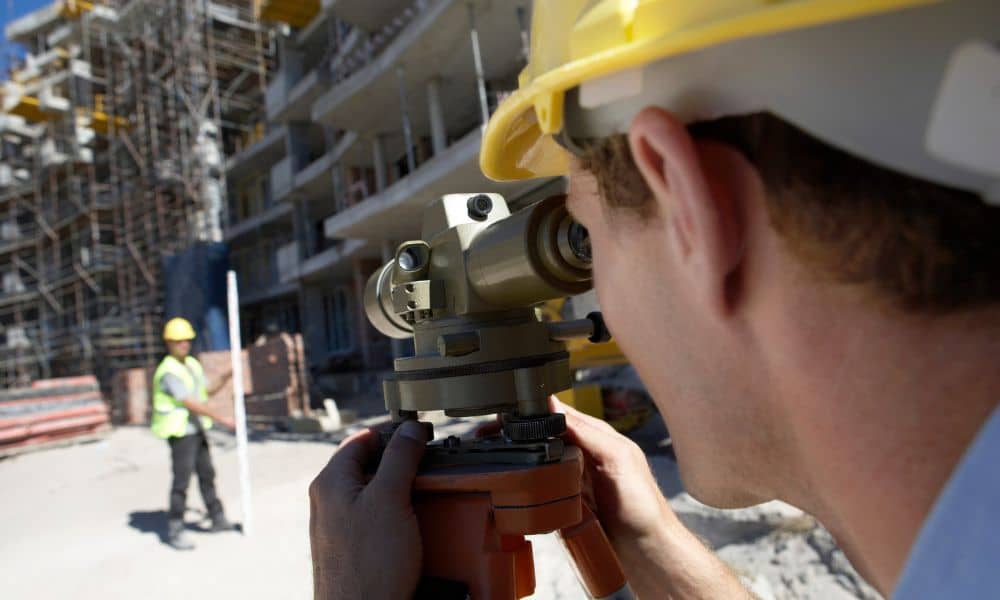
If you plan a commercial closing, you want clean facts, not surprises. That’s why people order an alta survey. It supports a deal with clear, defensible field data. Yet there’s a modern twist most buyers never consider. Many survey crews use GNSS (the satellite signals behind GPS) for parts of the work. Lately, those signals have faced a growing problem: spoofing and jamming.
In the last few days, aviation groups have sounded the alarm because pilots keep reporting more GPS interference in more places. That matters for land work too. If interference can mislead aircraft navigation, it can also mislead GNSS receivers used by survey crews—rovers, base stations, drones, and even machine-control gear.
Spoofing vs. jamming
Most people picture GPS trouble as a dead screen or a “no signal” warning. That’s jamming. It blocks the signal, so the receiver struggles or quits. Spoofing acts differently. Spoofing feeds a receiver fake signal information, so the receiver reports a location that looks normal but sits in the wrong place.
Here’s the part that matters for real estate: spoofing can look clean. The rover might say “fixed.” The numbers might hold steady. Because of that, the crew can move fast and still carry a quiet error.
Why clients should care
You might think, “That sounds like an overseas issue.” However, Minneapolis crews still depend on GNSS every day. They also work around tall buildings, trees, steel, and tight access. Those factors already stress satellite work. Now add the wider trend of more reported interference and more public warnings.
Also, GNSS signals arrive from space with low power. So a bad day can happen anywhere. That’s why smart crews treat GNSS as one tool, not the final judge.
How a small GNSS error turns into a big closing headache
Clients don’t pay for a pile of points. They pay for confidence. If a GNSS error slips into the control network, it can ripple through the map. Then a reviewer might spot something that “doesn’t add up.” For example, a feature might land in an odd spot compared to what everyone expects on-site. Even if the ground truth stays fine, the questions can still slow the deal.
Meanwhile, wrong positions can trigger real costs. A contractor might lay out work from the wrong reference. A team might restake. A designer might redraw. As a result, the project loses time right when the calendar matters most.
The good news: surveyors already know how to defend against this
Professional crews don’t “trust GPS.” They test it, compare it, and back it up. In fact, the best QC habits for an alta survey look a lot like the habits aviation uses. Crews avoid single points of failure. They also avoid relying on one moment in time.
Many crews use GNSS correction networks too. Corrections help a lot, but QC still does the heavy lifting. A spoofed position can still look “good,” so the crew needs checks that don’t depend on the same signals.
The QC steps that catch spoofing before it hurts your closing
First, strong crews build control they can defend. They tie the project into independent evidence whenever the site allows it—known control, reliable monumentation, or other trusted references. In short, independent anchors reduce single-point risk.
Next, they re-occupy critical points. They don’t accept one quick reading and move on. Instead, they come back later and check again. Spoofing often shows itself when time changes. If the second occupation doesn’t match the first, the crew knows they must dig deeper before they trust anything else.
Then they run sanity checks that match how land behaves. They compare key distances and angles. They look for shapes that don’t make sense. They also check that mapped features match what they see on the ground. Since spoofing can keep numbers stable, geometry checks matter even more.
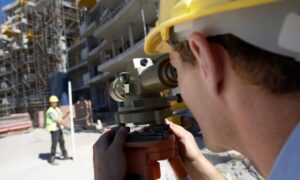
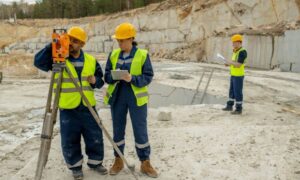
After that, strong crews keep a backup method ready. If GNSS starts acting strange, they pivot to a total station, a short traverse, or another independent tie. This step breaks the “single source” trap. In the field, redundancy beats hope every time.
They also keep records that help later. On high-stakes jobs, crews log detailed observations or raw GNSS data. That record helps them answer questions fast if a title reviewer, lender, or project team asks for support.
Finally, the best teams communicate early. If a crew sees odd GNSS behavior, they explain the impact in plain language and explain what they did to verify results. That clarity protects your schedule because it prevents last-minute confusion.
How to hire for an alta survey with confidence (without learning survey-speak)
When you call a firm, listen to the process. Ask, “How do you verify control if GNSS looks off?” Then ask, “What backup method do you use?” A strong team will describe rechecks and cross-checks in a calm, practical way. On the other hand, a weak answer will sound like blind faith in the rover.
Also, pay attention to how they talk about risk. A solid crew won’t panic. Instead, they will explain how QC protects your deal and keeps the deliverable defensible.
Bottom line
GPS spoofing makes headlines because it can mislead aircraft. However, the core lesson applies to land work too: GNSS can lie, and it can do it quietly. So a high-quality alta survey depends on more than technology. It depends on QC.
If you plan a purchase, refinance, or development, choose a team that treats GNSS as a tool and QC as the real product. Then you won’t just get a drawing—you’ll get field results your deal team can trust.