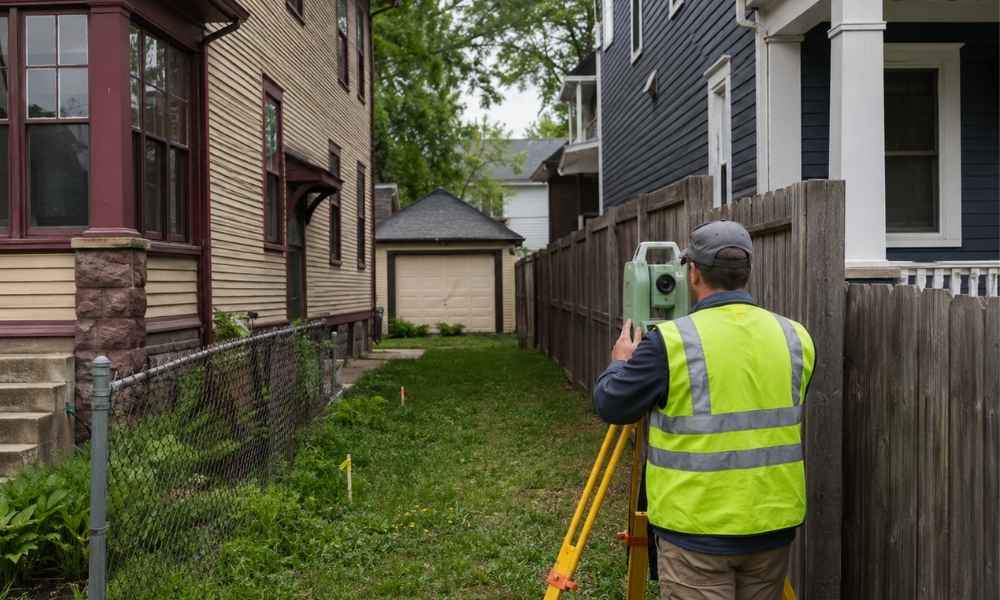
If you’re buying a narrow lot, you already know space is tight. Houses sit close together. Garages hug the property line. Fences run right along the edge of a yard. All of this changes how a surveyor prices the job, and it changes what you should ask before you get a quote.
This guide walks through the questions that matter most for compact lots, not general survey advice you can find anywhere.
Why a Narrow Minneapolis Lot Can Change the Survey Conversation
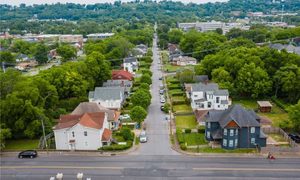
Minneapolis has plenty of older neighborhoods built on narrow lots. Many were platted decades ago, long before modern zoning rules pushed homes farther apart. That means less room to work with and more objects packed into a small area.
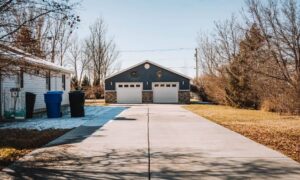
A surveyor working on a narrow lot often deals with a driveway a few feet from the house next door, a garage close to the back line, and a fence that may or may not sit exactly where the deed says it should. None of this is a boundary dispute. It’s just tight, busy ground.
Property survey cost depends on how much work a site actually needs, not how big the lot is. A quarter-acre lot with open space on all sides can sometimes take less time than a small city lot packed with structures. Before you request a quote, think about what’s actually on the property. That’s the real starting point.
Neighborhoods like Longfellow, Northeast, and parts of South Minneapolis all have blocks with these tight lot layouts. If you’re touring homes in one of these areas, ask your realtor or the seller for the lot dimensions early. A width of 30 or 40 feet is common in older sections of the city, and that width shapes almost every part of a survey job that follows.
What Exactly Is Included in the Property Survey Cost?
Ask for a written description of the work before you agree to a price. A quote should spell out what the surveyor will actually do, not just give you a number.
Basic fieldwork means measuring the property and locating corners and structures. Research means checking old records, past surveys, and county data tied to the lot. Preparing the survey document means putting the findings into a drawing you can use for closing, permits, or building plans.
Some quotes cover all three. Some cover only part of it. A low price might mean less research was done, or the drawing won’t include everything you need for your bank or the city.
Ask the surveyor directly: what does this price cover, from research to the final drawing? Get the answer in writing, not just a spoken promise.
Which Site Conditions Could Affect the Quote?
Small does not mean simple. A few common conditions can add time to a job on a narrow lot:
- Limited access. Tight side yards or shared driveways can slow down equipment setup.
- Existing structures close together. Garages, sheds, and additions built near the line take extra care to measure correctly.
- Vegetation and fencing. Overgrown bushes or old fence lines can hide corner markers.
- Paved surfaces. Concrete or asphalt can cover old markers that need to be found or reset.
- Poor visibility. Trees, shade structures, or nearby buildings can block the sight lines a surveyor needs.
None of these make a survey impossible. They just take more time on site, and time is what drives the price. Ask the surveyor if any of these apply to your lot before you accept a quote, not after the crew shows up.
A quick walk around the lot before you call a surveyor can help. Look for fence lines, sheds, patios, and anything built close to where you think the property line sits. Point these out when you request a quote. The more the surveyor knows up front, the fewer surprises come up once the work starts.
Does the Property’s Intended Use Change What You Need?
What you plan to do with the lot changes what kind of survey you actually need. Buying a home as-is calls for a different scope than buying land to add a garage, build an addition, or redevelop the lot completely.
Tell the surveyor your plans before you accept a quote. A survey built for a simple purchase may not show the setback lines or utility locations you’d need for a building permit. Skip this step, and you might end up paying twice: once for the first survey, and again for the extra work needed later.
This comes down to a real difference: the cost of a survey versus the cost of ordering the wrong scope. Getting the right survey the first time almost always costs less than fixing it after the fact.
Five Property Survey Cost Questions to Ask Before Closing
Before you sign off on a quote, ask these five questions:
- What survey services are included in this quote? Get a plain answer covering research, fieldwork, and the final drawing.
- Will the quoted work match my plans for the property? Say what you intend to build or change before you accept a price.
- Are there site conditions that could change the final cost? Ask about access, structures, and visibility on your specific lot.
- Are research, fieldwork, and the final document all included? Confirm none of the three pieces are missing from the quote.
- What would call for a revised quote? Find out what happens if the crew finds something unexpected on site.
These five questions cover most of what drives property survey cost on a narrow city lot. Ask them early, get the answers in writing, and you’ll know exactly what you’re paying for before the work begins.
A narrow lot isn’t a problem. It just means the questions you ask matter more. Buyers who walk into a quote conversation with clear answers about scope, site conditions, and intended use tend to avoid costly surprises later on.