

A topographic survey usually feels simple. You call a surveyor, they map the land, and you move ahead with your plans. But across Minnesota, this step now takes longer than expected. The reason may surprise you. The state is trying to fix old gaps in its original survey monuments, and this is slowing down many projects for homeowners, builders, and developers.
You may not notice these markers in daily life, but they shape what you see everywhere. Every road, fence, foundation, and property line depends on them. When they go missing, the whole surveying process slows. Today, Minnesota has lost more than half of the 325,000+ original monuments that once marked the land. Only about 148,000 have confirmed locations. The rest are buried, broken, or gone.
Now the state is trying to repair the system.
Why Minnesota Is Talking About Survey Monuments Again
Survey monuments are the hidden anchors of land. They were placed more than a century ago to mark section corners across Minnesota. These corners became the base for property lines, plats, roads, and legal maps.
But many monuments disappeared over the years. Road work, farming, building projects, erosion, and neglect caused them to shift or vanish. Countries tried to keep records, but the job was too big. As Minnesota grew, the number of missing markers increased.
Recently, the state brought this issue back into the spotlight through HF1478. This bill aims to find and restore lost monuments. It is still being discussed, but even now the impact is clear. Surveying teams must check or replace monuments before they can move forward on many jobs. That means more time, more work, and more delays.
All survey types feel the effect, but topographic surveys are hit the hardest because they depend on accurate control points to map elevation and features.
How Missing Monuments Slow Down Topographic Surveys
When a monument is missing, a surveyor must stop everything and confirm the true location. This takes research, field visits, and calls to the county. All these steps delay the work.
Surveyors need extra time to verify the control points that guide a topo. They cannot map the land until they know the exact location of the property in relation to official records. If the corner that controls a street or block is missing, the crew must find or re-establish it. This may mean checking nearby corners, reading old plats, or digging to find buried iron pipes.
Counties also want stronger proof. Many counties now double-check survey submissions because they know how many corners are unverified. Surveyors often must add photos, notes, or updated coordinates before the topo can be accepted.
Crews also deal with problems from old data. Older records sometimes disagree with modern GPS readings. When that happens, the crew must sort out the difference, sometimes with extra site visits. Weather makes delays worse. Minnesota ground freezes early and stays frozen late. When crews are behind because of monument issues, early snow or cold pushes schedules even further out.
Together, these issues slow down topographic surveys across Minneapolis and nearby cities. For people waiting on drainage plans, grading maps, or building permits, delays can feel stressful.
Why This Matters for Homeowners and Developers
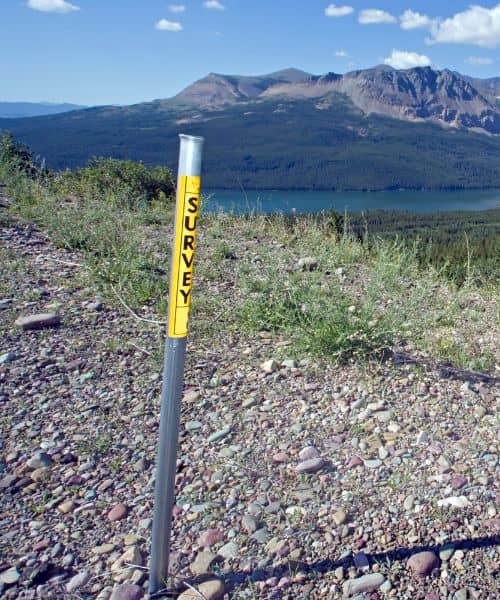
You may not care about a buried pipe from long ago, but the bank, the county, and your builder do. These old markers guide the legal lines of your property. When they are wrong or missing, everything built on your land becomes unclear.
This affects real people in real ways. A homeowner who wants a topographic survey before adding a new room may learn the nearby monument is missing. The surveyor must fix that first. A two-week wait turns into five or six.
A small developer working on an empty lot needs exact elevations to design drainage. When the topo is delayed, engineering is delayed. That means the permit is delayed. And that means the start date moves back, costing money.
A commercial builder who needs a site plan relies on accurate elevation data for utilities, grading, and stormwater flow. If the base data is wrong, the topo must be fixed, which slows the whole project.
These situations happen across Minnesota every week.
How HF1478 Tries to Fix the Monument Problem
Minnesota knows this issue affects projects of all sizes. HF1478 aims to recover and re-establish thousands of lost corners. Each corner can cost $1,800 or more to fix.
The bill focuses on public and tribal lands. It also calls for updated records with verified coordinates. Surveyors would use modern tools to protect accuracy and reduce future boundary disputes.
If this plan moves forward, Minnesota will have a better system in the long run. But while the work is happening, delays will continue. Fixing more than a century of missing markers takes time.
What You Should Do If You Need a Topographic Survey Soon
The best thing you can do is plan early. Surveying schedules fill up fast, especially when monument recovery is needed. Talking to your surveyor early helps set realistic expectations.
Tell them your timeline. Ask if your neighborhood has missing or unreliable markers. Older areas in Minneapolis and the suburbs often have these problems. You can also ask if drone or LiDAR tools can help once the monuments are confirmed.
Do not rush your surveyor. A topo done on wrong data can cause major problems later.
Good communication helps prevent surprises and delays.
Minnesota Will Improve, But It Will Take Time
The good news is that fixing monuments will help everyone in the future. Topographic surveys will become faster, clearer, and more accurate once the missing markers are restored.
But Minnesota needs time to catch up. The problem has built up for more than 100 years. This means delays will likely continue for now, especially in Minneapolis where development is busy and corners are older.
Final Thoughts
If you need a topographic survey, start early and be flexible. Monument recovery is improving the state’s accuracy, but it also slows down current projects. When you understand what is happening behind the scenes, you can plan better and avoid last-minute problems.