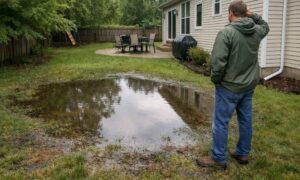
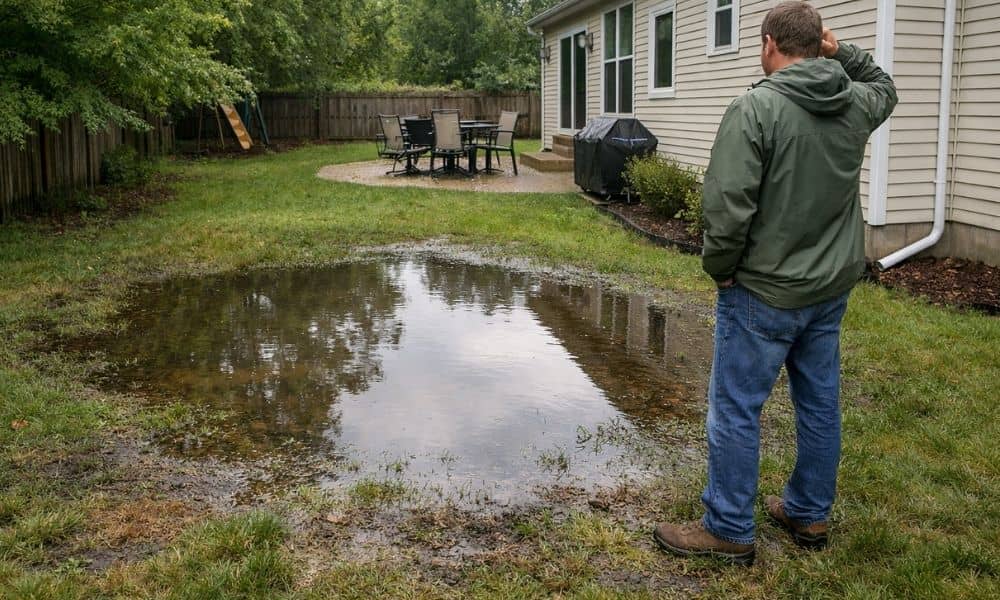
You step outside after a long rain. The yard still feels soft. A puddle sits in the same spot, just like last time. You give it a day or two, but nothing changes. This happens to a lot of property owners in Minneapolis. Some try to fix it right away. They add soil, dig a small trench, or call someone to level the ground. It seems simple at first. Then the water comes back. Standing water usually has a deeper cause. It follows the shape of your land, even when that shape is hard to see. That’s why many quick fixes fail. They deal with the surface, not the reason behind it. This is where lidar mapping comes in. It shows what your eyes can’t catch, and it helps you fix the issue the right way.
Why Drainage Problems Happen So Often in Minneapolis
The ground in Minneapolis does not stay the same year after year. Winters are long and cold. Soil freezes, then thaws. That cycle slowly shifts the surface.
Snow also plays a role. When it melts, a large amount of water hits the ground at once. If the land does not guide that water away, it starts to collect.
Older neighborhoods add another layer to the problem. Many lots were graded decades ago. Over time, small changes build up. A yard that once drained well may now hold water in a few spots.
The tricky part is this: most of these changes are small. You won’t notice them by walking around. The yard can look flat, even when it isn’t.
What LiDAR Mapping Actually Shows
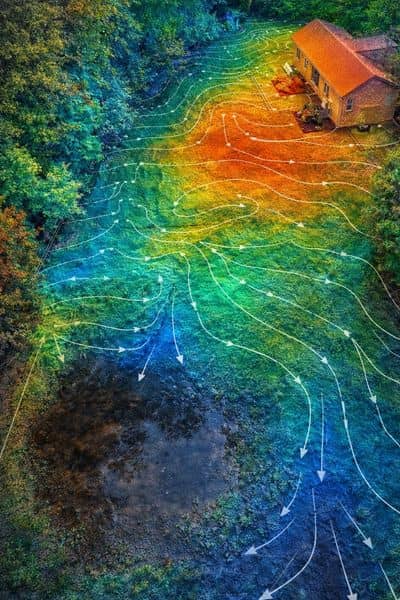
LiDAR mapping gives you a clearer view of your yard, so you can see how the ground really sits, even in small areas. When you look at it this way, things start to click. You notice slight dips, gentle slopes, and the spots where water tends to slow down or stay longer than it should. That’s how lidar mapping finds low spots in your yard, not by guessing, but by showing what’s actually there.
Once you see that, it’s much easier to follow how water moves across your property. You can tell where it flows, where it collects, and why it keeps coming back to the same place. Even small changes in height can affect this, especially during heavy rain or snowmelt.
Without that kind of view, most people focus on the puddle itself. What they don’t see is the path the water took to get there.
Seeing the Real Cause Before You Fix It
Most people focus on where the water ends up. That makes sense. It’s the part you notice first.
The real issue often starts somewhere else.
Water may flow from a higher part of your yard. It may come from a neighbor’s property. It may follow a path that only becomes clear during heavy rain.
When you use lidar mapping, you can trace that path. You see how water travels across the surface. You also see where it slows down or stops.
Once you understand that flow, your next step becomes much clearer. You stop guessing and start working with the shape of your land.
Why Quick Fixes Often Make It Worse
A common fix is to add soil to the low area. That seems logical. Raise the ground, and the water should go away.
Sometimes that works. Many times it does not.
If you don’t understand the slope, you may push water toward your home. You might also send it into another part of the yard. In some cases, you create a new low spot without realizing it.
Drains can have the same problem. If they are placed in the wrong spot, they don’t solve anything. They just move the issue around.
These fixes cost money and time. Then the next storm shows the same result.
When LiDAR Mapping Makes a Clear Difference
Some drainage problems are small and easy to handle. Others keep coming back no matter what you try.
LiDAR mapping becomes more useful when the issue repeats. If water stays in your yard for days, there is a reason behind it. If snowmelt turns part of your yard into mud every year, the surface likely needs adjustment.
It also helps before you start a new project. A patio, garage, or walkway can change how water moves. If you don’t plan for that, you may create a bigger problem than the one you started with.
Seeing the full layout first gives you control. You can plan changes that actually improve drainage instead of making it worse.
What LiDAR Mapping Does Not Show
LiDAR focuses on the surface. It shows elevation and slope, but it does not go below the ground.
It won’t tell you where pipes run. It won’t show soil type or how compact the ground is. Those details still matter, especially for larger projects.
Even so, surface shape is the main factor in many drainage problems. When you understand that shape, you solve a big part of the issue.
Why Local Experience Still Matters
Data helps, but it needs the right interpretation.
A local surveyor knows how Minneapolis soil behaves. They understand how freeze and thaw affect the ground. They also see how water moves across nearby properties.
They use lidar mapping to read the land, then apply that knowledge to your situation. That step turns raw data into a real solution.
Without that step, it’s easy to misread what the data shows.
A Smarter Way to Fix Standing Water
Standing water may seem like a small problem at first. Over time, it can affect your yard, your home, and even nearby properties.
Many fixes focus on what you see. They deal with the puddle, not the cause.
A better approach starts with understanding the land itself.
With lidar mapping, you get a clear picture of how your property drains. You see the slopes, the low areas, and the path water takes.
Once you have that view, the fix becomes more direct. You make changes that match the land instead of fighting against it.